Introduction
In the ever-evolving world of cybersecurity, two critical roles often emerge in discussions about defending against cyber threats: the Red Team and the Blue Team. These teams represent opposing sides in the security landscape, each with distinct goals, methods, and mindsets. Understanding Red and Blue Team dynamics is essential for developing robust cybersecurity strategies. In this post, we'll dive into these two teams' roles, responsibilities, and interactions.
What is a Red Team?
Objective: Emulate real-world attackers to identify and exploit vulnerabilities in an organization's defenses.
Methodology: The Red Team adopts the mindset of an adversary, using tactics, techniques, and procedures (TTPs) similar to those employed by malicious hackers. Their goal is to simulate sophisticated cyber-attacks to test and improve the organization's security posture.
Key Activities:
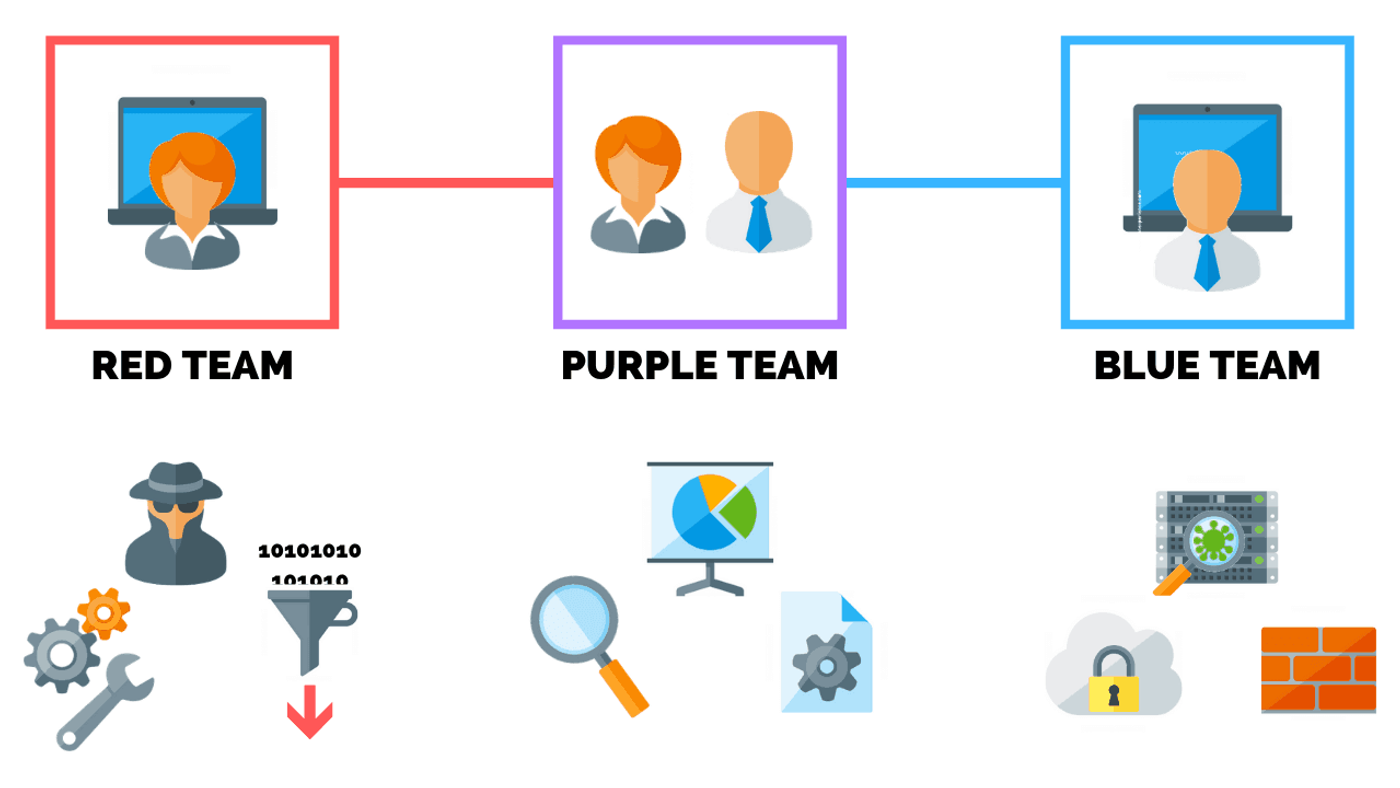
- Reconnaissance: Gathering intelligence about the target organization.
- Exploitation: Identifying and exploiting vulnerabilities to gain unauthorized access.
- Privilege Escalation: Elevating access rights to gain control over critical systems.
- Lateral Movement: Moving across the network to reach sensitive data and systems.
- Persistence: Establishing a long-term presence within the target environment.
- Data Exfiltration: Simulating the theft of sensitive information.
Tools Used: Nmap, Metasploit, Cobalt Strike, custom scripts, and various social engineering techniques.

What is Blue Team?
Objective: Defend the organization's assets by detecting, responding to, and mitigating cyber threats.

Methodology: The Blue Team focuses on monitoring, analyzing, and improving the security measures in place. They are responsible for ensuring that the organization's defenses are robust enough to withstand attacks from adversaries, including those simulated by the Red Team.
Key Activities:
- Monitoring: Continuously observing network and system activities for signs of malicious behavior.
- Threat Hunting: Proactively searching for threats within the network.
- Incident Response: Reacting to and managing security incidents to minimize damage.
- Vulnerability Management: Identifying and addressing security weaknesses.
- Security Audits: Regularly assessing the effectiveness of security controls.
- Training and Awareness: Educating employees on cybersecurity best practices.
Tools Used: SEIM systems (e.g. Splunk, ArcSight), IDS/IPS. firewalls, endpoint detection and response (EDR) tools, and vulnerability scanners.

The Dynamics Between Red and Blue Teams
The interplay between Red and Blue Teams is critical for enhancing an organization's cybersecurity posture. Here's how their dynamic typically unfolds:
- Adversarial Simulation: The Red Team launches a simulated attack, using sophisticated methods to breach the organization's defenses.
- Detection and Response: The Blue Team's job is to detect the intrusion as quickly as possible, respond to the threat, and mitigate any damage.
- Assessment and Improvement: After the exercise, both teams conduct a thorough review of what happened. This includes analyzing how the Red Team managed to bypass defenses and how the Blue Team responded.
- Feedback Loop: The insights gained from the assessment are used to improve both team's strategies. The Blue Team strengthens defenses based on the Red Team's tactics, while the Red Team develops new methods to circumvent these improvised defenses.
Benefits of Red Team vs. Blue Team Exercises
- Realistic Testing: Red Team activities provide a realistic assessment of the organization's security by mimicking real-world attack scenarios.
- Improved Detection and Response: Blue Teams refine their detection and response capabilities through hands-on experience with simulated attacks.
- Enhanced Security Posture: Continuous testing and improvement cycles lead to a more robust and resilient security posture.
- Cross-Functional Learning: Both teams gain valuable insights from each other, fostering a culture of continuous learning and improvement.
Purple Team: Bridging the Gap
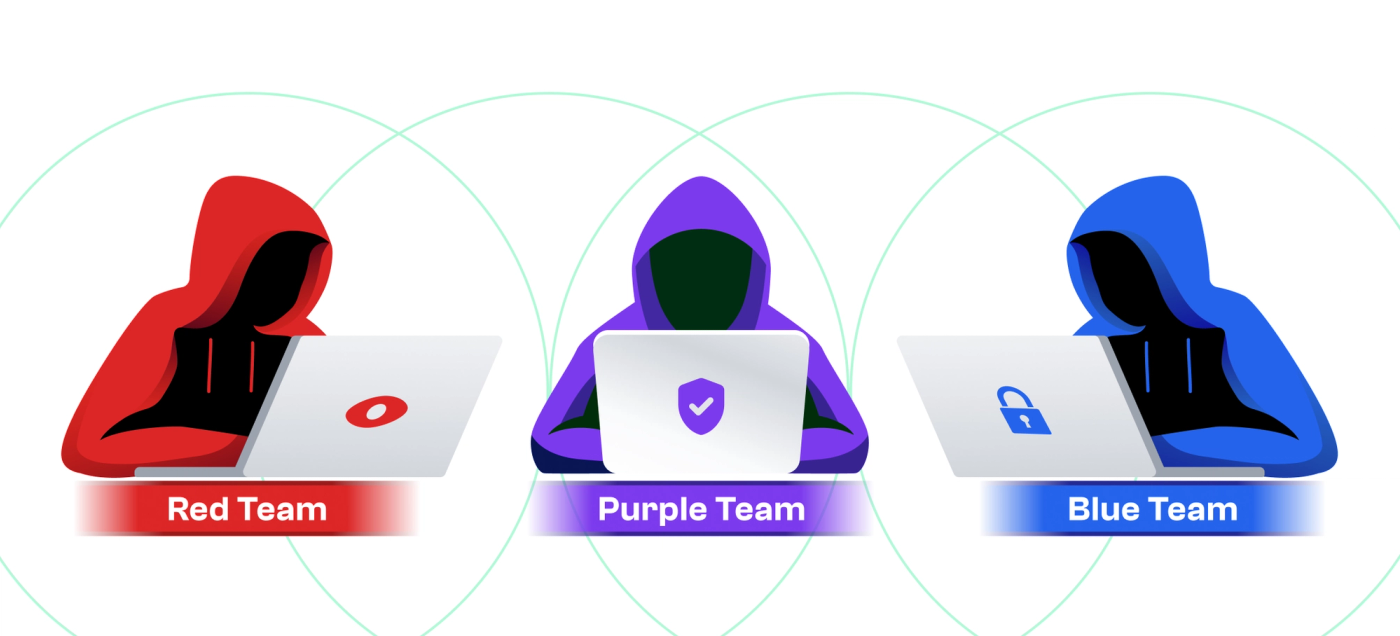
While Red and Blue Teams traditionally separate independently, some organizations have adopted a collaborative approach known as the Purple Team. The Purple Team integrates the Red and Blue Team's efforts to enhance communication and knowledge sharing.
Benefits of a Purple Team:
- Enhanced Collaboration: Red and Blue Teams work together, sharing tactics, techniques, and insights in real time.
- Faster Improvements: Immediate feedback loops lead to quicker identification and remediation of security gaps.
- Holistic Security: Combining offensive and defensive strategies results in a more comprehensive security approach.
Conclusion
The dynamic between Red and Blue Teams is a cornerstone of modern cybersecurity practices. By understanding and leveraging this interplay, organizations can significantly improve their defenses against increasingly sophisticated cyber threats. Whether through traditional Red/Blue Team exercises or the integrated Purple Team approach, the ultimate goal remains the same: to build a resilient and secure environment capable of withstanding the relentless advances of cyber adversaries.